


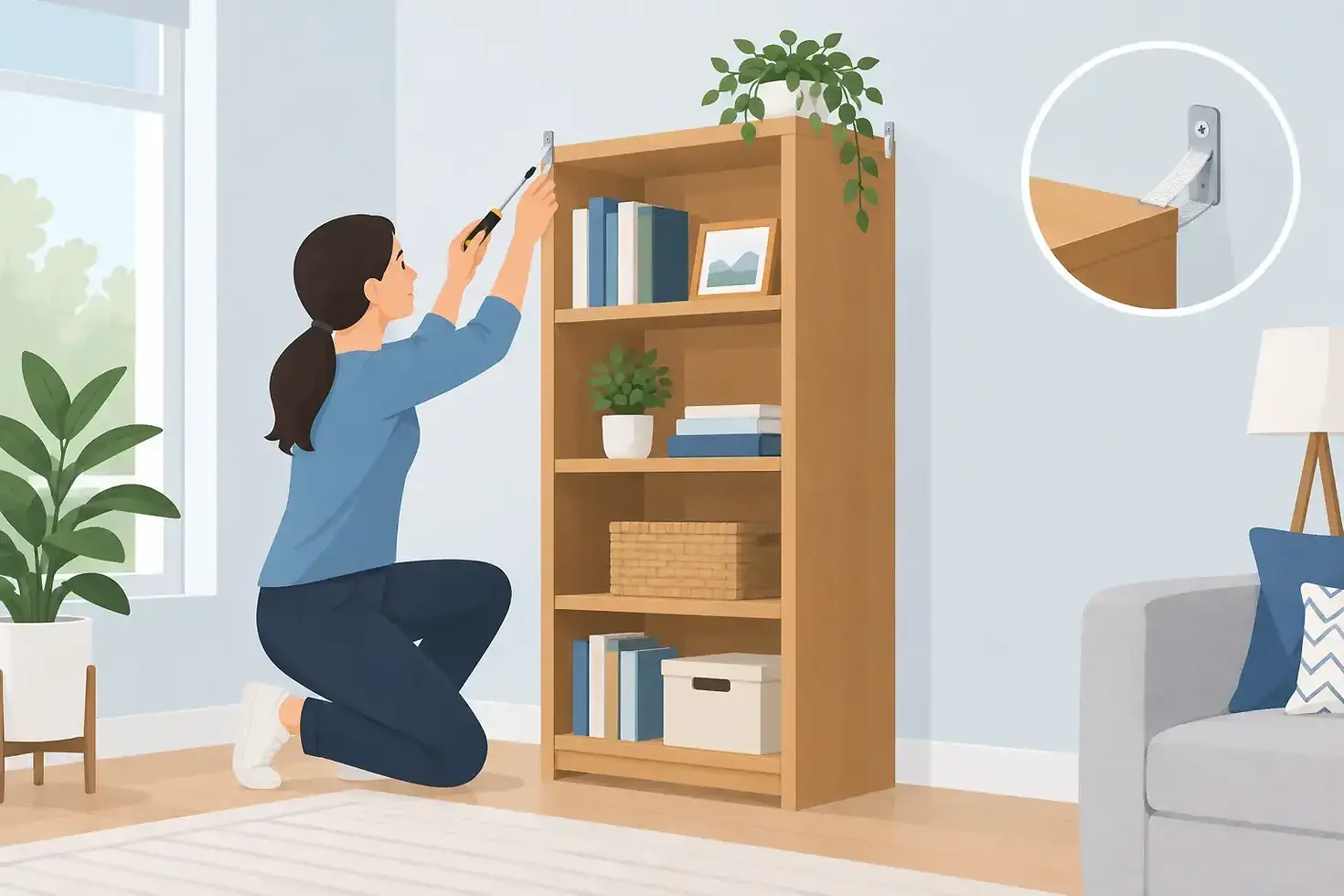
How to Secure Tall Furniture Safely at Home

A tall wardrobe can look solid and still be unsafe. A child climbing a drawer, an overloaded shelf, a pet brushing past, or a door opened too quickly can shift the weight enough for furniture to tip. To secure tall furniture safely, the job needs more than a strap and a screw. You need to know what wall you are fixing into, where the strongest fixing points are, and whether the furniture itself is assembled and level.
This matters in family homes, rented properties and newly furnished flats across London, Essex and Kent. Wardrobes, chest of drawers, bookcases, display units and tall shelving are often supplied with basic anti-tip kits, but these are only as good as the wall fixing and the way they are fitted.
Why tall furniture tips over
Tall furniture becomes unstable when its centre of gravity moves beyond its base. That can happen when heavy items are stored high up, several drawers are opened at once, or the unit is placed on an uneven floor. Freestanding furniture is particularly vulnerable if it is narrow, top-heavy or built on thick carpet that allows it to rock.
Children are at greatest risk because they may climb open drawers or use a shelf for support. However, adults can also be injured when a poorly assembled wardrobe shifts during use. The answer is not simply to avoid buying tall furniture. Properly assembled, positioned and wall-secured furniture is practical and safe for everyday use.
Check the furniture before fixing it
Before reaching for a drill, make sure the furniture is sound. Flat pack wardrobes and bookcases need every cam lock, dowel, screw and back panel fitted correctly. A missing fixing or loose rear panel can allow the unit to twist, which puts unnecessary pressure on a wall strap or bracket.
Place the item in its final position and check that it sits flat. If it rocks, adjust the feet where available or use suitable furniture levellers. Do not use folded card, loose timber offcuts or temporary packing as a permanent solution. The unit should be upright and stable before it is anchored.
Think about loading too. Store heavier books, files, toys and household items on lower shelves. Avoid putting heavy storage boxes on the top of a wardrobe or bookcase. A wall fixing prevents a tip-over, but sensible loading reduces the force placed on it in the first place.
Leave a sensible gap behind the unit
Many wardrobes need a small gap at the back for skirting boards, cables or uneven walls. That is normal, but do not pull the furniture away from the wall just to make a strap reach. Use the correct bracket, spacer or fixing method so the restraint sits securely without bending the furniture back panel.
If a wardrobe is fitted close to a radiator, window, door swing or plug socket, plan the position carefully. You need access to the fixing point and should not drill into an area where pipes or cables may run.
Choose the right anti-tip restraint
The best restraint depends on the furniture design and wall type. Most manufacturers provide either a nylon anti-tip strap, an L-shaped bracket, a metal wall anchor or a combination of these. Use the supplied kit if it is suitable, but check the screws and plugs rather than assuming they will work in every wall.
Metal brackets are often a strong choice for solid furniture because they hold the top rear edge close to the wall. Straps can be useful where a small amount of movement is needed or where the furniture has a dedicated fixing loop. For wider units, fitting two restraints is usually better than relying on one central point.
Do not substitute picture hooks, adhesive strips, cupboard catches or lightweight mirror fittings. They are not designed to hold a heavy unit if it starts to fall. Likewise, avoid attaching a restraint only to a thin hardboard back panel unless the manufacturer specifically instructs you to do so. The fixing needs to connect to a structural part of the furniture, such as the top rail, side panel or reinforced rear fixing point.
Match the wall fixing to your wall
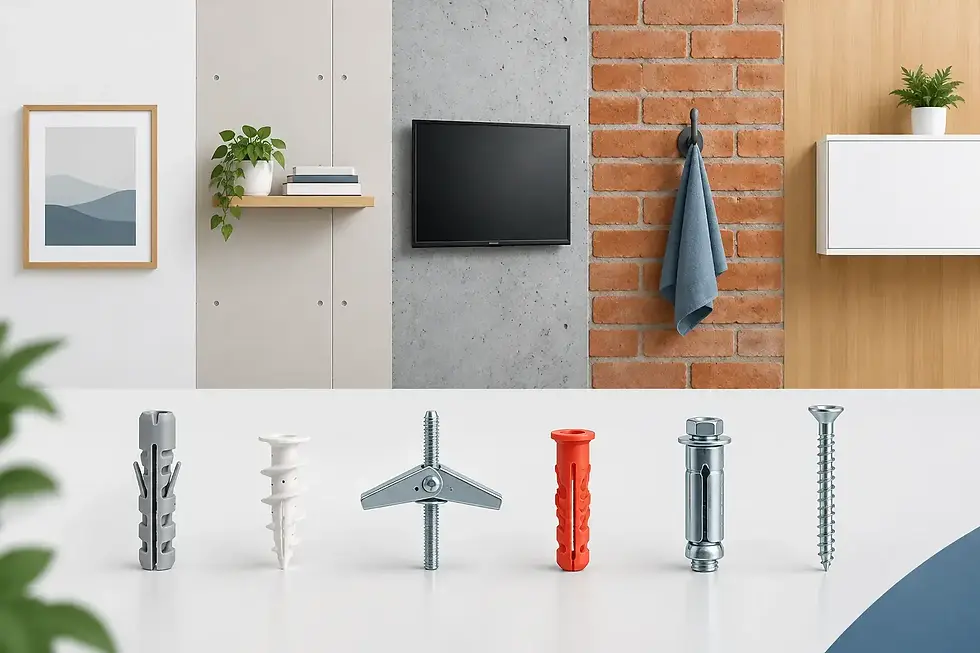
This is the part that causes most problems. A good bracket fixed into the wrong wall plug can pull straight out under load. Homes in the local area commonly have solid brick or concrete walls, stud partitions with plasterboard, dot-and-dab walls, and new build plasterboard walls. Each needs a different approach.
Solid brick and concrete walls
Brick and concrete can provide an excellent fixing base when drilled correctly. The right screw and masonry fixing should be selected for the weight of the furniture and the condition of the wall. Older brickwork can be softer than it looks, while mortar joints are generally not as reliable as sound brick.
Take care around chimney breasts, external walls and areas close to electrical points. A cable and pipe detector is a sensible precaution before drilling.
Plasterboard and stud walls
Plasterboard alone is not designed to carry the force of a tipping wardrobe. The strongest option is usually to locate a timber or metal stud and fix through the plasterboard into that structure using suitable screws. A stud detector can help, though results should be checked carefully as pipes, cables and metal corner beads can cause false readings.
If a stud is not in the right place, use a heavy-duty plasterboard fixing rated for the job and appropriate for the wall cavity. This can work for lighter furniture, but it is not a shortcut for a very heavy, fully loaded wardrobe. In some cases, a different furniture position, a wider restraint arrangement or professional advice is the safer option.
Dot-and-dab and new build walls
Dot-and-dab walls have plasterboard set away from the masonry with adhesive dabs, leaving a void behind sections of the board. Standard plugs may grip the plasterboard but fail to reach the blockwork, while an over-tightened fixing can crush the board. Long, purpose-made fixings that bridge the gap and anchor into the masonry are often required.
New build plasterboard walls can be equally deceptive. They may look clean and uniform, but the wall construction behind them varies from property to property. Never guess based on appearance alone. Identifying the wall type before drilling is what keeps the furniture secure and avoids unnecessary wall damage.
How to secure tall furniture safely, step by step
Once the furniture is assembled, level and correctly positioned, the fitting process should be straightforward but precise.
First, identify the strongest fixing points at the top rear of the furniture. Mark the wall through the bracket or strap fitting, keeping the restraint as high as practical. Then check the drilling area for hidden services and confirm the wall construction.
Drill the correct diameter and depth for the selected fixing. Fit the wall plug, anchor or long fixing as required, attach the restraint to the wall, then secure it to the furniture. Tighten everything firmly, but do not over-tighten screws into chipboard as this can strip the material.
Finally, test the result. Hold the top of the unit and apply controlled forward pressure. There should be no significant movement, rocking or loose fixings. Check again after loading the furniture, particularly if it is a large wardrobe with heavy doors.
Common mistakes to avoid
A few shortcuts can turn a simple safety job into a weak installation. Avoid these common issues:
Fixing only into plasterboard without checking for a stud or using a suitable heavy-duty anchor.
Attaching the bracket to a flimsy back panel rather than a structural part of the unit.
Using the wrong screws, particularly short screws that do not reach the solid structure behind the wall.
Securing furniture before it is level, which leaves it under strain and may cause it to twist.
Leaving drawers overloaded or storing the heaviest belongings at the top.
It is also worth checking existing restraints after a house move, decorating work or furniture rearrangement. A strap may have been disconnected, a screw may have loosened, or a new carpet may have changed how the unit sits on the floor.
When it makes sense to call a professional
Some furniture anchoring jobs are quick, especially on a sound brick wall with clear manufacturer instructions. Others need more care. A large sliding-door wardrobe, a tall IKEA unit on a new build wall, or a bookcase installed above uneven skirting can all require the right tools and fixings to do properly.
If you are unsure about the wall type, do not have a detector or drill, or want several pieces of furniture fitted during the same visit, professional help can save time and reduce the risk of damage. We Fit All can assemble flat pack furniture and secure wardrobes, shelving and other tall units using a fixing method suited to the wall and the item being installed.
A properly restrained wardrobe or bookcase should not be something you think about every day. Fit it carefully once, load it sensibly, and give it a quick check whenever the room or furniture layout changes.


Comments