


TV Mounting Versus TV Stand: Which Works Best?
- Ruddyuddy FilmMaking Tutorials
- Jun 21
- 6 min read

You usually notice the difference between a wall-mounted TV and a TV on a stand the moment you walk into the room. One looks clean and built in. The other gives you storage and flexibility. When it comes to TV mounting versus TV stand, the right choice depends less on trends and more on how you use the room, who lives in the property and what sort of walls you have.
For some households, mounting the TV is the obvious answer. For others, a good stand is the safer and more practical option. The best setup is the one that fits your space properly, keeps the screen secure and does not create extra hassle later.
TV mounting versus TV stand: the main difference
A TV stand is furniture. It supports the screen without fixing it to the wall, and it often gives you shelf or cupboard space for consoles, soundbars, routers and boxes. It is simpler to move around and does not rely on the wall structure.
TV mounting fixes the screen to the wall using a bracket suited to the TV size, weight and wall type. Done properly, it can save floor space, improve viewing height and create a tidier finish. Done badly, it can leave you with a loose bracket, damaged plasterboard or a screen sitting at the wrong angle.
That is why this choice is not only about style. It is also about safety, installation quality and how permanent you want the setup to be.
When wall mounting makes more sense
Wall mounting tends to work best when space is tight or when you want the room to feel less cluttered. In many London flats and smaller living rooms, getting the TV off the furniture and onto the wall can free up valuable room. It can also make a bedroom or dining area feel more organised, especially where there is not much floor space to spare.
It is also useful if you want the screen at a specific height. A lot of TV stands leave the screen lower than ideal, especially if you are watching from a bed or from a sofa set back across the room. A mounted TV can be positioned to suit the seating rather than whatever height the unit happens to be.
Families with children or pets often prefer mounting for another reason. A properly installed bracket reduces the risk of a large screen being knocked or pulled forward. That matters with bigger modern TVs, which are often wider and thinner than people expect.
Then there is the finish. A mounted TV with tidy cable management simply looks sharper. If you have spent time decorating, fitting new furniture or improving the room, a wall-mounted screen can make the whole setup feel more intentional.
When a TV stand is the better option
A TV stand still has plenty going for it. If you are renting and do not want to drill into the wall, a stand may be the straightforward answer. The same applies if you expect to rearrange the room often or move house soon.
Stands also suit people who need storage. Not every home has space for separate cabinets, and not every TV setup is just a screen and a remote. If you have a game console, streaming box, sound system or multiple accessories, a solid unit can keep everything in one place.
There is also less commitment. If the sun hits the screen badly in one corner or the seating changes, you can reposition a stand much more easily than a bracket. That flexibility can be useful in multi-use rooms where the layout changes over time.
And while some people assume a stand is always the cheaper option, that depends on what you buy. A basic stand may cost less upfront than a quality mount and installation, but premium furniture can quickly overtake it. Cost needs looking at properly rather than by assumption.
Safety is where the decision gets serious
The biggest mistake people make in the TV mounting versus TV stand debate is treating safety as an afterthought. A large TV is not light, and modern walls are not all the same.
Solid brick and concrete walls usually give a strong fixing point when the right fittings are used. Plasterboard walls, including many new builds, need more thought. In some cases mounting is still absolutely possible, but the bracket, fixings and wall condition all matter. This is where experience counts, because one wall is not the same as the next.
A stand has its own risks too. If it is too narrow, too light or poorly built, it can become unstable. If the TV feet are right near the edge, or if cables are trailing where children can grab them, the setup can still be unsafe. The fact that it is not drilled to the wall does not mean it is automatically the safer choice.
The real question is not which option sounds easier. It is which option can be installed securely in your actual room.
Viewing comfort matters more than people think
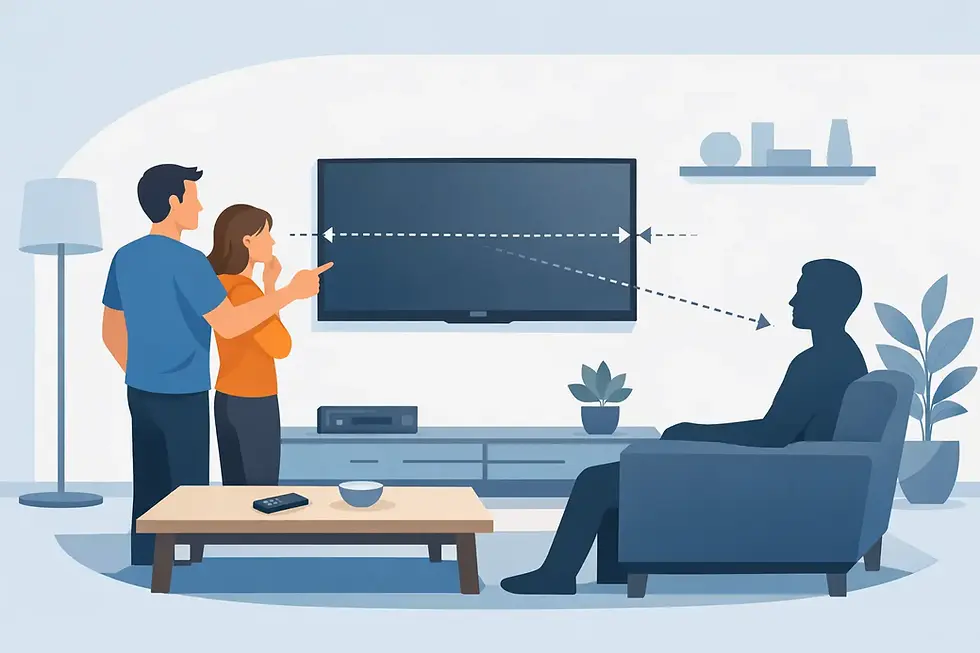
A TV that looks good but feels awkward to watch will annoy you every day. Height, angle and glare all affect comfort.
Wall mounting gives you more control here. A fixed bracket keeps the screen flush and neat, but a tilt or full-motion bracket can help if the TV is going higher on the wall or needs to angle towards a seating area. This is especially useful in bedrooms, open-plan rooms and awkward alcoves.
A stand can still give a good viewing position, but only if the furniture height suits the sofa or bed. Too low, and you are constantly looking down. Too high, and you end up with a sore neck. If your room has bright windows, you may also have fewer options for adjusting reflections.
This is one reason many homeowners choose mounting after living with a stand for a while. The TV may be perfectly functional, but the setup never quite feels right.
Cables, devices and the overall finish
This is often where the decision becomes obvious. If you hate seeing wires, mounting usually wins. A neat wall-mounted installation can route cables cleanly and keep the area around the TV looking far less busy.
That said, a stand can make device access easier. If you use consoles, media boxes or a soundbar every day, having everything on shelves below the screen is convenient. You do not need to think as much about where each item will go.
The best solution sometimes combines both. A mounted TV above a media unit gives you the cleaner look of wall mounting with the practicality of storage underneath. For many homes, that is the sweet spot.
Cost, effort and what happens on installation day
A TV stand is usually faster to deal with if you already own the furniture and it is the right size. But if the unit still needs building, levelling and positioning, it can take more work than expected.
Wall mounting takes planning. The screen size, bracket type, wall construction, cable route and viewing height all need to be considered before drilling starts. If the wall is plasterboard, the job needs even more care. The end result is often better, but it is not the sort of job to guess your way through.
That is where using a local specialist helps. For households across Dagenham, Essex, London and Kent, getting the TV installed properly first time saves a lot of stress, especially with larger screens and difficult wall types.
Which option suits your home best?
If your priority is a cleaner look, better use of space and a more built-in finish, mounting is usually the stronger choice. It is especially effective in smaller rooms, modern living areas and homes where safety and neatness matter.
If your priority is flexibility, storage and avoiding permanent wall fixings, a stand may suit you better. It can also be the practical route in rental properties or rooms where the layout changes often.
For many households, the answer is not purely one or the other. It comes down to the wall you have, the room layout, the size of the screen and whether you want the setup to feel temporary or properly finished.
A good TV setup should work with your home, not fight against it. If you are unsure, the sensible next step is to look at the room, the wall and the equipment properly before deciding. That way, you end up with something secure, tidy and comfortable to live with every day.


Comments