


7 Wall Mounted TV Benefits for Your Home
- Ruddyuddy FilmMaking Tutorials
- Aug 2
- 5 min read

A television left on a stand can quickly become the centre of a cluttered living room - especially when it is surrounded by consoles, loose cables, speakers and children’s toys. The practical wall mounted TV benefits are clear: you gain usable space, improve the look of the room and position the screen where it is most comfortable to watch.
For homes across London, Essex and Kent, mounting a TV is often one of the simplest ways to make a lounge, bedroom or kitchen feel more organised. But the finish depends on more than putting a bracket on the wall. The TV size, wall type, viewing position and cable plan all need to be right.
1. More floor and furniture space
The most immediate benefit of mounting a television is the space it creates. Removing a large TV stand gives you more room for seating, storage or simply a clearer walkway. This is particularly useful in smaller London flats, box rooms and open-plan living areas where every bit of floor space matters.
You may still choose to keep a low cabinet beneath the TV for a games console, Sky box or soundbar. The difference is that the cabinet becomes storage rather than a piece of furniture that has to support the weight and footprint of the screen. It also makes cleaning around the TV area far easier.
A wall-mounted screen can make a room look less crowded without requiring a full redecoration. It is a practical upgrade that works whether your style is minimal, traditional or somewhere in between.
2. A safer position for children and pets
Large modern televisions are slim, but they are not light. A freestanding TV can be knocked, climbed on or pulled forwards if it is not properly secured. Mounting it to a suitable wall with the correct bracket and fixings significantly reduces this risk.
This matters in busy family homes, rented properties and rooms where children play. It also helps when pets regularly run through the room or when a TV is positioned on a narrow unit that does not offer much stability.
Safe fitting is not just about using a bracket rated for the TV’s size. The bracket must suit the actual weight of the television, the wall construction and the position of any studs, cables or pipes behind the surface. A solid brick wall, concrete wall, plasterboard partition and new-build plasterboard wall all require a different approach.
3. Better viewing height and a more comfortable room
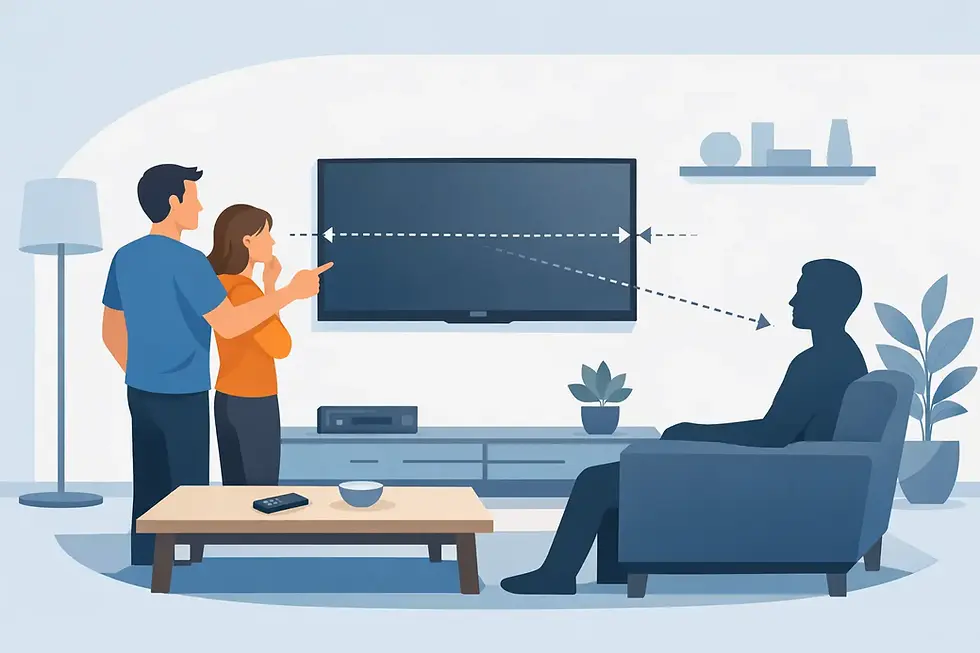
Many TVs on stands sit lower than is ideal, particularly when viewed from a sofa or bed. A correctly mounted screen lets you set a sensible viewing height for the people using the room, rather than accepting the height of the furniture underneath it.
For most living rooms, the centre of the screen should sit around seated eye level. However, there is no single measurement that works in every home. A television above a fireplace, for example, will naturally be higher, while a bedroom TV may need to angle down towards the bed.
The aim is to avoid spending every film night looking upwards with your neck strained. Tilt brackets and full-motion brackets can help where the screen has to sit higher than usual, but they need to be chosen and fitted carefully so the TV remains secure and the angle is useful.
4. The wall mounted TV benefits for a cleaner finish
A mounted TV creates a neater focal point, particularly when the cables are planned properly from the start. Power leads, aerial cables, HDMI connections and network cables can otherwise spoil the result, even with an expensive television and a good bracket.
There are several ways to deal with this. In some homes, cables can be routed into trunking and painted to match the wall. In others, a cable channel can be installed behind the screen, with sockets and equipment positioned below. The best option depends on the wall, the available access and whether the property is owned or rented.
It is worth deciding which devices you need connected before installation. A TV with a soundbar, games console, streaming box, aerial feed and wired internet connection needs more cable capacity than a screen used only for built-in apps. Planning this before the bracket goes up prevents awkward changes later.
5. More flexibility with bracket types
Not every TV needs to sit flat against the wall. Fixed brackets are a good choice when the viewing position is directly in front of the screen and you want the slimmest possible finish. They are straightforward, secure and often ideal for living rooms.
Tilt brackets are useful when the TV is mounted slightly above eye level. They allow the screen to angle down, which can reduce glare and improve the viewing angle. Full-motion or swivel brackets give the most flexibility, allowing you to pull the TV out and turn it towards different parts of the room.
A swivel bracket can work well in an open-plan kitchen-diner, a corner installation or a room where people watch from more than one seating area. The trade-off is that these brackets place greater leverage on the wall, so the fixing method and wall strength are especially important.
6. Less glare in bright rooms
A TV stand generally limits where the screen can go. Wall mounting gives you more control over the final position, which can help avoid glare from windows, patio doors and lamps.
Before fitting, look at the room at different times of day. A spot that looks perfect in the evening may catch direct sunlight in the afternoon. Sometimes moving the TV slightly to one side, changing its height or using a tilt bracket is enough to make the picture much easier to see.
This is also a reason not to choose a mounting position based on appearance alone. The wall may be the obvious visual centre of the room, but it still needs to work for everyday viewing.
7. A stronger finish for landlords and home improvements
A professionally mounted television can make a furnished rental, holiday let or newly decorated home feel more considered. It creates a tidy entertainment area and avoids leaving tenants to balance a valuable TV on unsuitable furniture.
For homeowners, it is a practical part of a wider room update. Once the TV is mounted, it is easier to add shelves, a soundbar, LED backlighting, blinds or curtain poles without the room feeling disjointed. Having several small jobs completed at the same time can also save disruption.
That said, landlords and tenants should agree on the work before drilling starts. A strong installation leaves fixing holes if it is removed later, and some tenancy agreements have clear rules on alterations to walls.
What to check before mounting your TV
A good installation starts with a few straightforward checks. Confirm the TV’s size and weight, check its VESA mounting points and decide whether you need a fixed, tilt or swivel bracket. Then consider the wall itself, the viewing height and every cable that needs to reach the screen.
Do not assume a hollow-sounding wall cannot hold a TV, or that every solid-looking wall is simple to drill into. Plasterboard walls can often safely support a television with the right specialist fixings and a proper assessment of the stud layout. Equally, solid masonry may contain services that need to be avoided.
If you are unsure, getting the installation assessed is better than buying a bracket that does not suit the job. We Fit All installs TVs of all sizes on plasterboard, new-build walls, brick and concrete across Dagenham, London, Essex and Kent, with suitable brackets available where needed.
A well-mounted TV should look as though it has always belonged there: level, secure, comfortable to watch and free from distracting cable clutter. Take a little time to plan the position properly, and the room will work better every day.


Comments